
THE SPICE SPECTRUM: How to Recognize the Warm Spices.
- Sep 24, 2024
- 3 min read
Updated: Nov 18, 2024

Well, folks we did it. We made it through the scorching sun of summer.
If it hasn’t happened already in your area, soon, very soon, the temperature will catch up with the calendar and we’ll begin to experience cooler days and even cooler evenings.
Fall is a time to celebrate the harvest. And we do, this by picking and processing the bounty of our gardens or increasing our visits to local Farmer’s Markets. We still love to sit on restaurant patios in the cooler weather but it’s also fun again, cooking meals at home.
In Autumn, we naturally seek comfort and warmth. A sprinkle of cinnamon in our morning oatmeal, a blend of spices in our lunchtime pumpkin muffin, and maybe a spicy chai as an after-dinner treat.
It’s only natural to gravitate toward the warm spices during this season.
But how do we know what spices we’re consuming?
THE WARM SPICES
Ginger, nutmeg, turmeric, cinnamon, cardamom, cayenne, star anise, and cloves have been treasured for centuries.
Let’s look at each one separately. Recognizing the eight warm spices in food can enhance your culinary experience and help you appreciate the depth of flavors they bring.
Here’s a quick thumbnail on how to identify each spice in various dishes:

Ginger – Pungent and slightly sweet with a hint of citrus. Commonly found in Asian dishes (stir-fries, soups, marinades) it’s also popular in baked goods (gingerbread, pumpkin muffins, gingersnaps.) If you don’t want to deal with fresh ginger, try the frozen cubes of ginger from Trader Joe's.
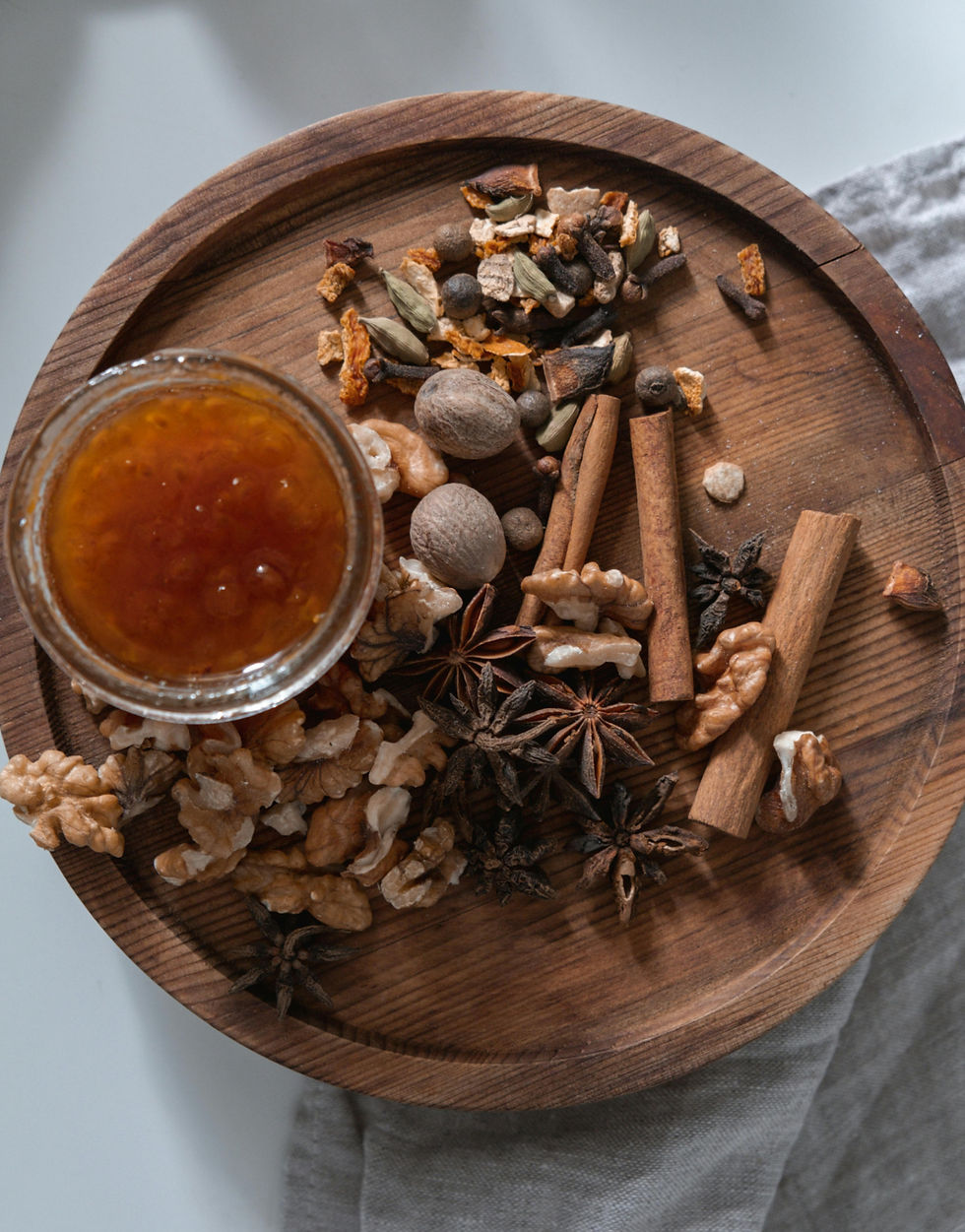
Nutmeg - Warm, nutty, sweet, peppery, earthy, cozy, and slightly spicy. Used in baked goods, puddings, and savory dishes like meats, sausage, sauces, and veggies. People, of course also love it in eggnog. Best when freshly grated, nutmeg's warm flavor makes it a staple of winter cooking. But be careul when using it - I think a little goes a long way.

Turmeric - Earthy and slightly bitter with a warm aroma, Turmeric is enjoying a moment. It's a staple in Indian curries and rice dishes. It’s also used in golden milk, health tonics, and nutritional shots. You’ll know it by its bright yellow/orange color, it’s often seen in curries or as adding color in soups and stews.

Cinnamon - Sweet and woody (earthy) with a warm scent. Used in both sweet dishes (like cinnamon rolls and apple pie) and savory recipes (like Moroccan tagines). Look for ground cinnamon sprinkled on desserts or cinnamon sticks used to infuse flavor in beverages.

Cardamom - Sweet and spicy with floral notes. Commonly found in chai tea, Middle Eastern dishes, and Scandinavian baking. Cardamom has a unique flavor that's hard to describe, but it has notes of eucalyptus, pine, menthol, and citrus. You usually find ground cardamom in spice blends.

Cayenne - Hot and pungent with a smoky undertone. Often used to add heat to sauces, soups, and meat rubs. Look for its bright red color in spice mixes or as a garnish on spicy dishes.

Star Anise - You’ll know it by the sweet and licorice-like taste with a strong aroma. Prominent in Asian cuisines, particularly in pho and five-spice powder. Identify it by its star-shaped pods, often used whole to infuse flavor into broths or stews.

Cloves – My favorite of the warm spices. Strongly aromatic with a sweet and slightly bitter taste. Used in spice blends, baked goods (like pumpkin pie), and savory dishes (like stews).
Whole cloves are small, nail-like buds that can be found studded into meats or added to spice mixes.
It’s not always easy to recognize the spice in cooked dishes but here are a few additional tips for recognition:
✨Smell the Spices: Each of the spices has a distinct aroma that can help you identify it when cooking or tasting food.
✨Taste: If you're unsure, try tasting small amounts of the spices individually to familiarize yourself with their unique flavors.
Enjoy! ❤️
This makes me want to bake something. The photos are simply gorgeous! I can practically smell the spices.